20/20- Disappearing Glaciers
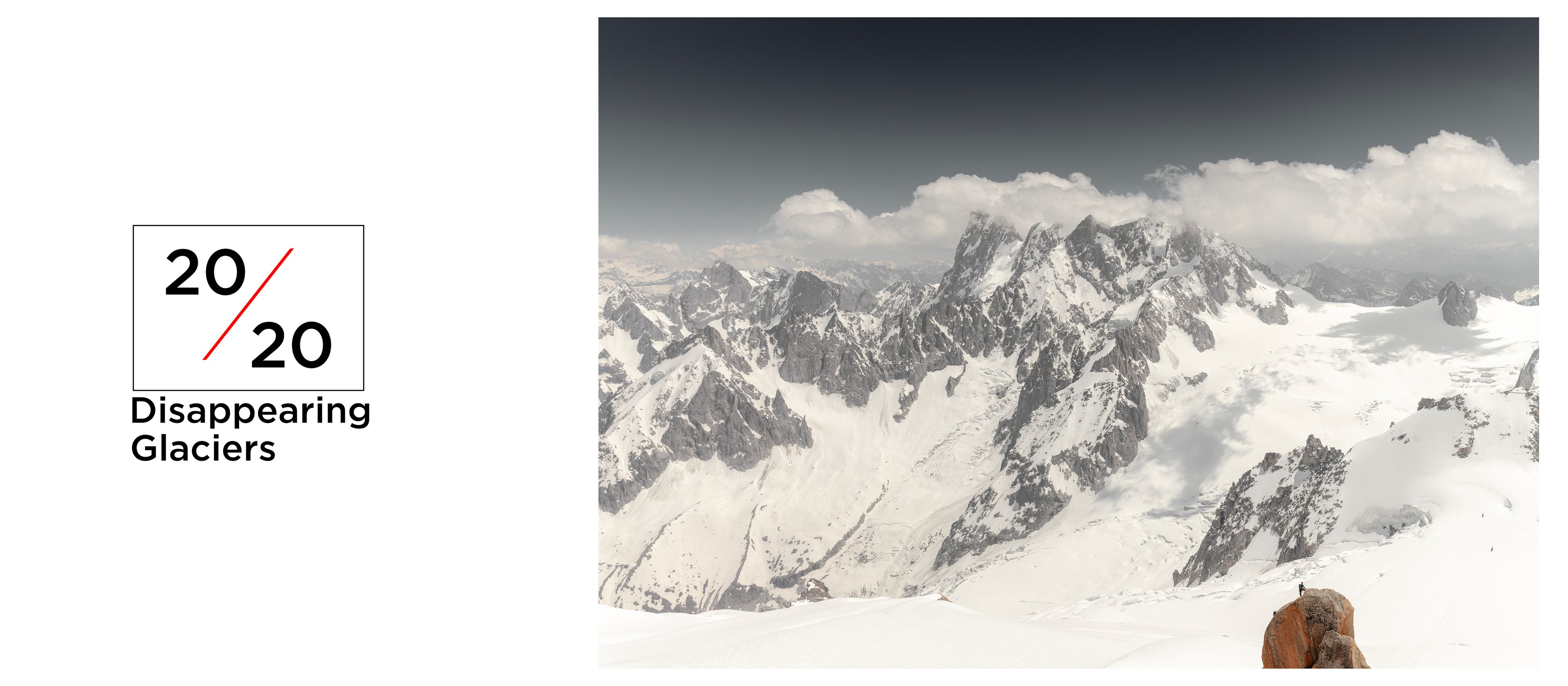
20/20 — Disappearing Glaciers is a founder-led, museum-grade photographic master record documenting disappearing glaciers and northern transformation across the circumpolar North and alpine headwaters—during a time-bound window when critical elements are vanishing.
Built for permanent public record, exhibition, and institutional stewardship, the archive is designed for broad public access for programming and education.
Through monumental large-format photography and a field-capable expedition platform, the project documents ice and headwaters, the lives and systems around them, and the industrial and policy edges shaping their future.
The intent is simple: restore direct public contact with what is happening on the planet, at human scale, through primary documentation.
At a Glance:
- What: Museum-grade photographic primary record of disappearing ice and northern transformation
- When: Phase I (Years 1–3) is the build: core fieldwork, archive construction (print + digital), and initial public release
- Where: Circumpolar North + alpine headwaters (Canada-first framing available where appropriate)
- Ask: Anchor underwriting for Phase I fieldwork and archive production
- Next step: Request the one-page overview and Phase I budget tiers
Project Overview:
- Monumental stitched medium-format panoramas, comprehensive digital multi-media archive spanning the expedition arc, and a sumo-format book, upon completion for institutional stewardship and record.
Four interlocking layers:
- Ice — glaciers, ice-fields, snowpack, meltwater
- Animals — non-human lives bound to these climates
- Human communities — Indigenous stewards, workers, families, scientists
- Industrial/policy edges — ports, roads, vessels, rigs, energy, and the systems shaping the North
Program Structure & Deliverables
- Phase I (Years 1–3): Core archive build + initial public release (digital-first), establishing the operational platform and a stewardship-ready master record
- Phase II (Years 4–7): Repeat visits and longitudinal documentation (subject to funding/partners)
- Phase III (Years 8–10): Synthesis, major releases, and long-term institutional stewardship (subject to funding/partners)
- Annual outputs: New fieldwork, releases, and curatorial/educational assets for institutional programming
Partnership
We are seeking:
- Anchor underwriting for Phase I fieldwork and archive production
- Technical partners (imaging, navigation/comms, power, mobility)
- Institutional partners for stewardship, exhibition, and long-term public access
If you’re evaluating the opportunity, please reach out for the one-page overview and Phase I scope.
Team:
World-class leadership in field science, creative production, and expedition logistics.
- Julienne Stroeve, PhD — Research Professor, NSIDC; Manitoba 150 Chair; climate science and Arctic research authority
- Kristina Reed, MD — Medical/Surgical; Medical Director
- Rob McSkimming — Ex-SVP, Whistler Resorts; global resort and development strategy
- Tim Sack — Executive Director, Buckhorn Public Arts (501)(c)(3) — fiscal & public art partner
- Matteo Calcamuggi — IFMGA mountain guide; Arctic/Alpine logistics
- Dave Birkenfield — USN NSW SC SEAL (ret.); Team Director at Chip Ganassi Racing; Arctic operations
- Andrew Wilz — Founder / Expedition Lead; Strategy MBA; internationally awarded photographer; creative director, athlete
Why This Team:
- Proven leadership: Not speculative—decades of delivery across sport, science, creative production, military, and international business
- Operational discipline: Safety, medical oversight, and logistics are treated as core requirements
- Creative and scientific credibility: The archive is built to institutional expectations—technically, ethically, and operationally
The Value:
A permanent public record—museum-grade, archival, and stewardship-ready—designed for long-horizon institutional care and broad public access.
Role in the Climate & Conservation Ecosystem
20/20 is designed to support existing climate, conservation, and education work by producing a durable master record and institutional-grade assets that help partners communicate what is changing across the North and alpine headwaters.
Our non-profit public arts partnership is with Buckhorn Public Arts 501c3
Support dialogue is ongoing with the Energy & Climate Initiative @ The Aspen Institute.
Output:
- Sumo-format (120cmx120cm+ closed) museum archival-standard, photography book.
- Giant format printed archive
- Digital archive vault for institutional programming and preservation + public education and integration.
F.T.L.O.G someone please help get this launched. Glaciers are melting. Time is running o u t .